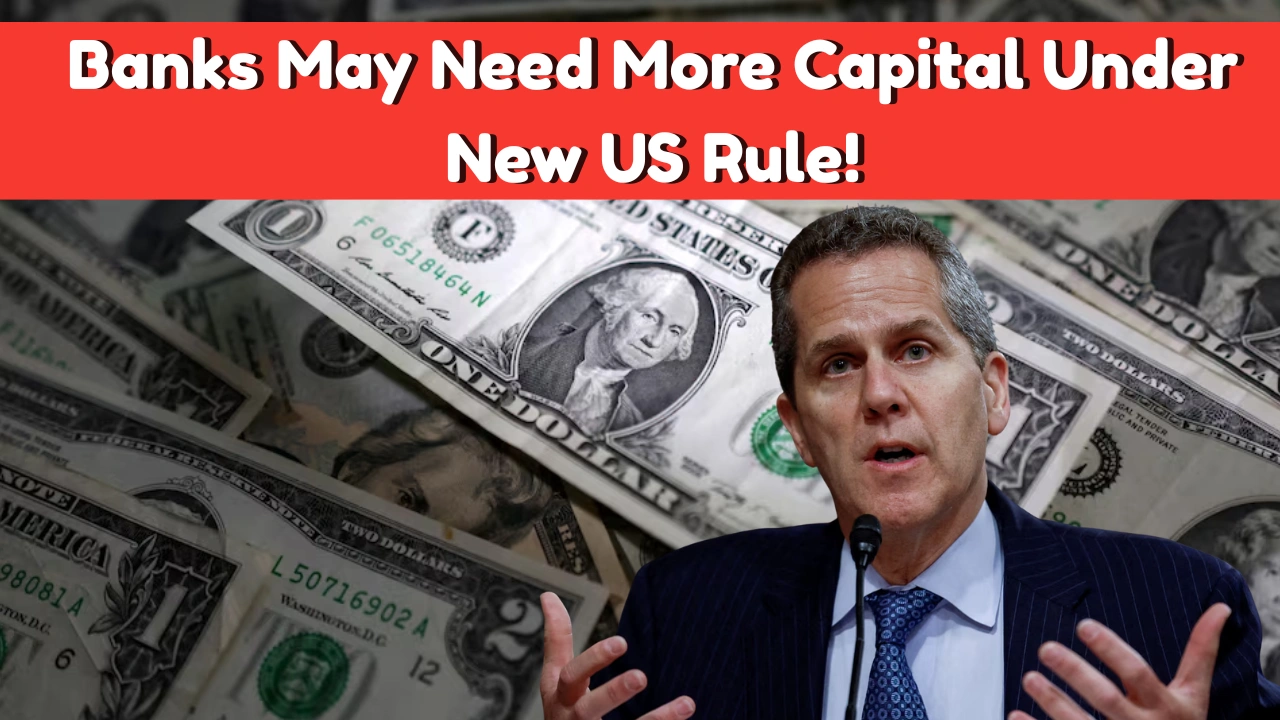
Banks Face New Rules: In a major development for the U.S. financial sector, banking regulators are reportedly close to finalizing a new capital framework that will require banks to hold more capital against U.S. Treasury securities and other interest rate–sensitive assets, according to Bloomberg News. The move marks one of the most significant post-crisis regulatory shifts in years — designed to prevent future banking collapses and strengthen balance sheet resilience.
The Push for a Stronger Capital Rule
Banks Face New Rules- The upcoming regulation — part of the broader “Basel III Endgame” reforms — aims to ensure that banks can withstand severe interest rate shocks like those that triggered the collapse of Silicon Valley Bank (SVB) and other regional lenders in 2023.
According to Bloomberg’s report, U.S. regulators, including the Federal Reserve, Office of the Comptroller of the Currency (OCC), and the Federal Deposit Insurance Corporation (FDIC), are now in the final stages of negotiation. The rule could be unveiled as early as December 2025.
Why Treasuries Are at the Center of the Plan
Treasuries have traditionally been seen as the safest assets in the global financial system. However, as rates surged in 2022–2023, their prices fell sharply, eroding the balance sheets of banks that held large amounts of long-term government debt.
The failure of SVB, which had billions tied up in long-duration Treasuries and mortgage-backed securities, exposed how unrealized losses could quickly turn into liquidity crises when depositors panic.

Regulators now want to tie capital requirements to interest rate risk, ensuring that banks hold extra cushions if they are heavily exposed to long-term Treasuries or similar assets.
Industry Pushback
Not everyone is happy. Large and regional banks have lobbied aggressively against the proposal, warning that higher capital charges could:
- Reduce lending capacity to businesses and consumers.
- Distort the market for Treasuries, a cornerstone of global finance.
- Make it harder for banks to compete with nonbank lenders.
The Bank Policy Institute (BPI) and American Bankers Association (ABA) argue that the plan risks “overregulation” and could stifle credit at a time when the economy is still absorbing high interest rates.
“We agree with stronger oversight, but penalizing Treasuries — the most liquid assets on Earth — doesn’t make sense,” said a BPI spokesperson. “It’s an overreaction to a unique crisis.”
Regulatory Perspective
Regulators, however, insist that the new rules are necessary for financial stability. They argue that the speed and severity of the 2023 bank runs revealed deep weaknesses in the system.

“Liquidity and interest rate risks are intertwined,” said Michael Barr, the Fed’s Vice Chair for Supervision, in an earlier statement. “Banks must prepare for both.”
The rule is expected to complement other reforms, including stricter stress tests, enhanced liquidity coverage, and greater disclosure of unrealized bond losses.
What Comes Next
Once finalized, the rule would enter a public comment period, after which regulators will finalize implementation timelines — likely phased in over several years.
Analysts say the new requirements could reshape bank balance sheets and shift investment patterns away from long-duration securities. Some predict that demand for short-term Treasuries will rise, while smaller banks may restructure portfolios to avoid higher capital charges.
“The market impact could be significant,” said Lydia Chen, a senior analyst at Moody’s. “Banks will need to rethink how they manage liquidity and duration risk.”

Broader Economic Impact
The Treasuries-linked capital rule may also influence the broader U.S. bond market. With banks potentially buying fewer long-term Treasuries, yields could rise, affecting everything from mortgage rates to corporate borrowing costs.
However, regulators say the trade-off is worth it: greater stability over higher risk-taking.
Conclusion: The Treasuries-linked capital plan represents a major evolution in how regulators view bank safety — treating interest rate exposure as a central risk rather than a side issue. While banks warn of lending slowdowns and tighter liquidity, regulators believe this step is vital to protect depositors, maintain confidence, and prevent another SVB-style crisis.
As the plan nears finalization, Wall Street and Washington alike are watching closely — because what happens next could reshape the future of U.S. banking regulation for the next decade.
Disclaimer: This article is for informational and educational purposes only. Details are based on publicly available reporting from Bloomberg News and official regulatory sources as of November 2025. Readers are encouraged to follow verified outlets such as The Wall Street Journal, Reuters, and Federal Reserve releases for the latest updates.