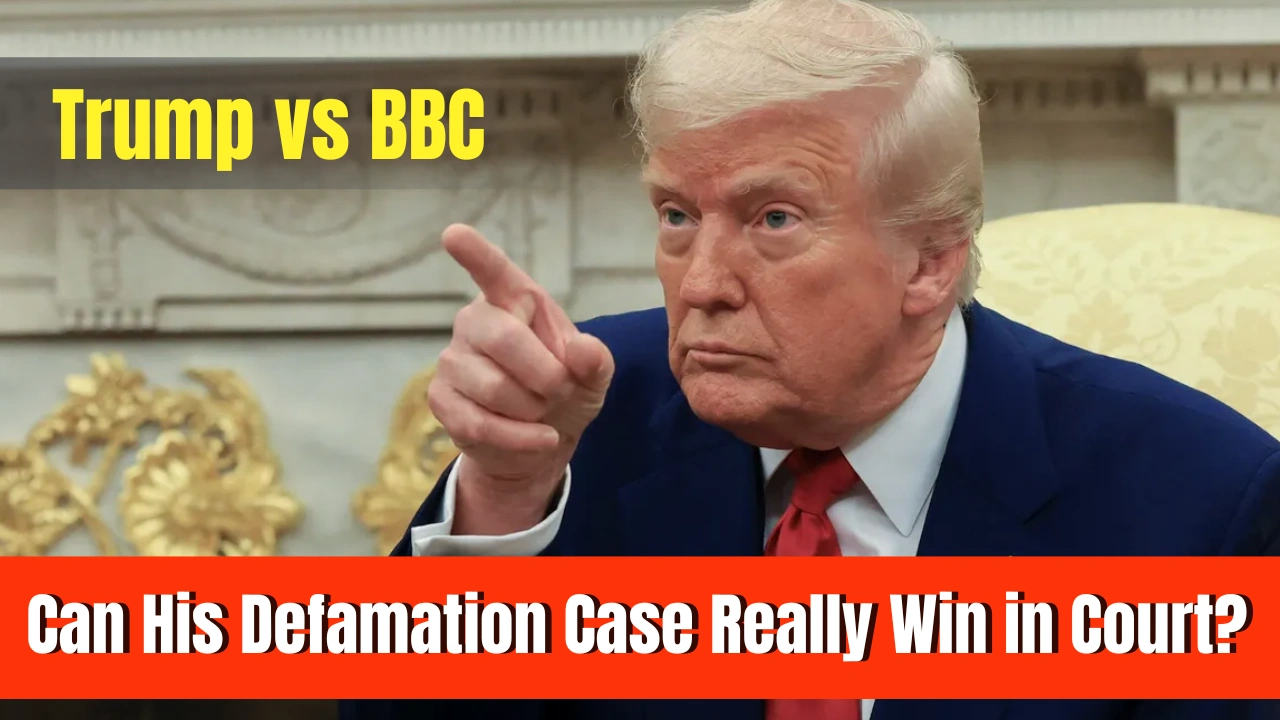
Trump vs the BBC: A new legal showdown is brewing between former U.S. President Donald Trump and the British Broadcasting Corporation (BBC) after Trump’s legal team accused the network of “defamatory and politically motivated reporting.” The case, which Trump’s lawyers say could be filed in both U.S. and U.K. courts, raises complex legal and diplomatic questions about press freedom, jurisdiction, and defamation law across two countries.
As Trump ramps up his 2026 campaign, the dispute highlights his long-standing battle with major media outlets — but legal experts say his argument could face serious hurdles.
The Dispute: Trump’s Allegation Against the BBC
Trump vs the BBC- The controversy began after the BBC aired a special investigative report examining Trump’s business dealings and alleged financial irregularities during his post-presidency ventures. Trump’s legal team quickly branded the documentary “a hit job designed to damage his political reputation.”
In a fiery statement, Trump’s campaign accused the BBC of spreading “false, reckless, and malicious misinformation”, claiming the network’s sources were politically biased and relied on “unverified documents.”
“The BBC has crossed a line from journalism to election interference,” Trump’s spokesperson said. “We are reviewing all legal options in both the U.S. and U.K.”
However, the BBC has stood by its reporting, insisting it adhered to strict editorial and fact-checking standards, adding that “public figures, including political candidates, are subject to legitimate scrutiny.”

Legal Hurdles in the U.S.
If Trump’s team files a defamation suit in the United States, the case will face major legal challenges under the First Amendment, which protects free speech and press freedom.
To win a defamation case as a public figure, Trump would have to prove that:
- The BBC made false statements of fact,
- Those statements caused actual harm to his reputation, and
- The BBC acted with “actual malice” — meaning it knew the information was false or acted with reckless disregard for the truth.
“That’s a very high bar,” explained Mark Feldman, a First Amendment lawyer at Columbia Law School. “Trump has sued media organizations before and rarely succeeded because U.S. courts give broad protection to journalists covering matters of public concern.”
In previous cases, including Trump’s suits against The New York Times and CNN, courts dismissed the claims, citing lack of evidence of actual malice.
Legal Hurdles in the U.K.
Trump’s team has hinted that they may also consider filing a parallel suit in Britain, where defamation laws are far more favorable to plaintiffs. However, that approach presents its own obstacles.
Under U.K. law, claimants must show that the publication caused serious harm to their reputation — a lower threshold than in the U.S. But British courts would also need to determine whether they have jurisdiction to hear the case.

Since the BBC’s reporting involved a U.S. political figure and was widely consumed outside the U.K., judges may question whether British courts are the appropriate venue.
“Trump would need to show that the BBC’s alleged defamation had a substantial audience impact within the U.K.,” said Rachel Lister, a media law barrister in London. “Otherwise, it could be dismissed as a misuse of the British legal system.”
Additionally, the BBC could invoke public interest defenses, arguing that its investigation concerned global financial integrity and political accountability — both recognized under British law.
Political and Strategic Context
Legal experts also note that Trump’s threats of litigation often serve political and rhetorical purposes.
“Trump’s lawsuits against media outlets tend to play better in the court of public opinion than in actual courts,” said Dr. Andrew Morris, a political communications analyst. “They reinforce his narrative that mainstream media is biased and out to get him.”
The dispute could energize Trump’s voter base, particularly among supporters who view international media as part of the “global establishment” opposing his nationalist agenda.

Still, going after the BBC — a respected, publicly funded broadcaster with strong legal resources — could prove more difficult than confronting U.S. media networks.
Broader Implications for Press Freedom
The case could also raise questions about press freedom and international media law. If Trump pursues litigation in both countries, it may set a precedent for cross-border defamation cases involving public figures and global news outlets.
Media organizations warn that such lawsuits could have a chilling effect on investigative reporting, particularly when political leaders attempt to use courts to intimidate journalists.
The Committee to Protect Journalists (CPJ) criticized Trump’s threats, saying they “undermine press freedom and democratic accountability.”
Conclusion: Trump’s legal battle with the BBC could become another high-profile test of how far political leaders can go in challenging global media organizations. But legal experts say his case faces steep hurdles on both sides of the Atlantic, especially given the protections surrounding political reporting.
As the 2026 campaign season intensifies, Trump’s confrontation with the BBC may prove more symbolic than legal — another chapter in his ongoing war with the press that plays out as much in headlines as in courtrooms.
Disclaimer: This article is for informational and educational purposes only. It is based on public reporting, legal commentary, and expert analysis available as of November 2025. Readers should consult official court filings or verified outlets such as Reuters, Bloomberg, and BBC News for updates.