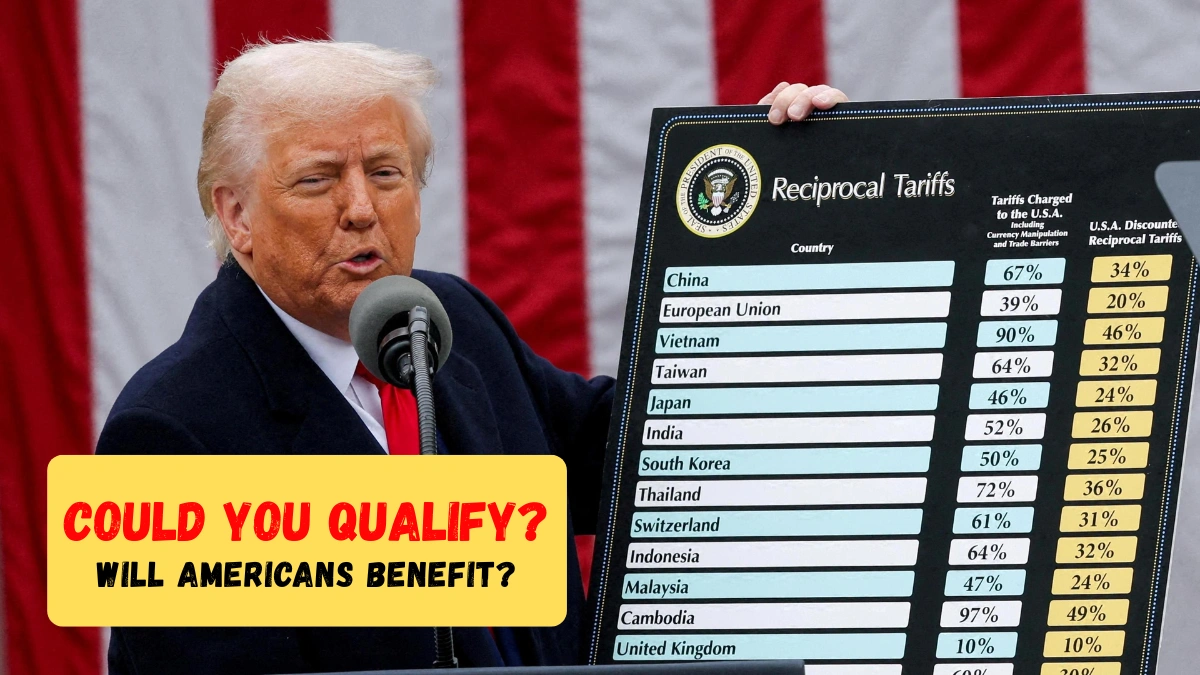
US Tariffs: A major discussion has erupted across the country as Donald Trump’s proposed $2,000 tariff rebate for Americans gains attention. The idea is bold, highly debated, and widely searched as people try to understand whether this rebate is realistic, how it would work, and who might benefit from it. Here’s a clear, Google Discover–friendly explainer that breaks down the proposal in simple terms.
What Is Trump’s $2,000 Tariff Rebate Proposal?
US Tariffs- Trump has discussed a plan where the United States would collect higher tariffs on imported goods and return a portion of that revenue directly to Americans. The $2,000 “tariff rebate” is being presented as a way to give households financial relief using money generated from foreign imports rather than from taxpayer funds.
The concept is straightforward:
Tariffs are charged on products coming into the country, the government collects this revenue, and some of it is returned to American families as a yearly rebate.
How Would the Tariff Rebate Be Funded?
The rebate would rely on tariff income — not income taxes or new federal fees. Supporters argue that stronger tariff policies could generate enough annual revenue to fund the payments. Critics, however, warn that tariffs often lead to higher prices in stores, meaning consumers may still ultimately bear the cost.

This raises an important question:
Would the rebate fully offset potential price increases caused by tariffs?
Economists believe the answer depends on how high the tariffs are and how companies respond to increased import costs.
Who Might Receive the $2,000 Rebate?
Although the final eligibility list has not been confirmed, early discussions suggest the payment could target a wide range of Americans. Depending on how the program is structured, potential recipients might include full-time workers, lower and middle income households, families with dependents, and retirees who meet income criteria.
The number of people potentially eligible could reach 100 to 150 million Americans, depending on the income threshold Congress sets if the plan moves forward.
Is the $2,000 Rebate Confirmed?
As of now, there is no officially approved policy, no signed bill, and no scheduled payment. The rebate is part of a broader economic discussion and would require:
- Congressional approval
- A formal bill outlining funding, eligibility, and distribution
- Agreement between political parties
Without these steps, the payment cannot be issued.
Economic Experts Are Divided
Supporters say the rebate could stimulate consumer spending, strengthen household finances, and reduce dependence on foreign imports. Critics argue that tariffs often raise the cost of goods, creating inflation-like effects that may cancel out the rebate’s benefits.
Economists also warn that large-scale rebates require stable revenue streams — something tariff income alone may not consistently provide during global market shifts.

Conclusion: Trump’s proposed $2,000 tariff rebate has generated massive public interest and debate. While the idea offers exciting financial relief for millions of Americans, it remains a proposal, not an approved policy. The plan’s success would depend on congressional action, economic stability, and how tariffs ultimately impact everyday prices.
Until official announcements are made, Americans should rely only on confirmed government updates regarding any future payments.
Disclaimer: This article is for informational and news-reporting purposes only and does not constitute financial, economic, or political advice; any official rebate or payment will depend entirely on government approval and legislative action.