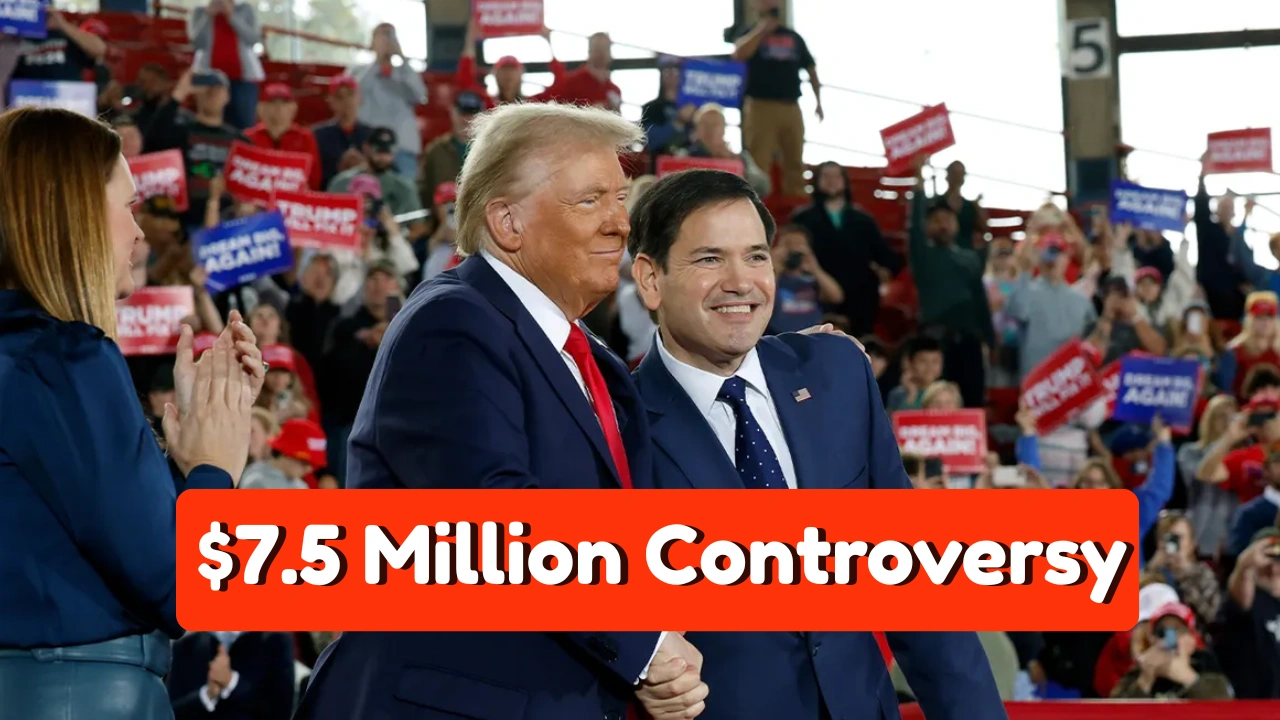
$7.5 Million Controversy: A new political storm is brewing in Washington after a U.S. senator publicly criticized Sen. Marco Rubio for approving a $7.5 million payment to Equatorial Guinea in exchange for accepting deportees who were denied asylum or legal stay in the United States. The move has sparked fierce debate in Congress, with critics calling it “cash-for-deportation diplomacy.”
The Controversial Deal
$7.5 Million Controversy- According to reports, the U.S. government agreed to pay $7.5 million to the small oil-rich African nation of Equatorial Guinea as part of an arrangement to resettle deported foreign nationals who could not be returned to their home countries due to safety or diplomatic concerns.
The agreement, brokered under a State Department repatriation initiative, was supported by Senator Marco Rubio, who has long advocated for stricter immigration enforcement and partnerships with third countries to manage deportations.
However, the decision quickly drew criticism from lawmakers on both sides of the aisle, who questioned both the ethics and transparency of paying a foreign government to accept migrants.
Senator’s Rebuke
Leading the criticism was Senator Alex Padilla (D-California), who accused Rubio and the administration of “outsourcing America’s immigration responsibility.”

“Paying a dictatorship millions to take deportees is not immigration policy — it’s a moral failure,” Padilla said on the Senate floor. “Equatorial Guinea has a well-documented record of human rights abuses. Sending people there for a checkbook deal undermines America’s values and credibility.”
Other Democratic lawmakers echoed Padilla’s concerns, pointing out that Equatorial Guinea’s government, led by President Teodoro Obiang Nguema Mbasogo, has faced multiple sanctions and human rights allegations.
Rubio’s Defense
Sen. Rubio defended the payment, insisting it was part of a “pragmatic and lawful” deportation strategy aimed at resolving a long-standing issue of “unreturnable deportees.”
“For decades, our immigration system has been broken because some countries refuse to take back their citizens. This agreement is a step toward fixing that problem,” Rubio said in a statement. “It protects U.S. taxpayers and strengthens national security.”
Rubio’s team emphasized that the payment was not a personal or political arrangement, but part of a broader foreign assistance package tied to diplomatic cooperation on deportations and counterterrorism.

Human Rights Concerns
Human rights groups, however, are alarmed. Organizations like Human Rights Watch and Amnesty International have condemned the deal, arguing that deportees sent to Equatorial Guinea could face detention, mistreatment, or exploitation.
Equatorial Guinea, one of Africa’s smallest nations, has long been accused of corruption, repression, and political persecution. Despite its vast oil wealth, the country has one of the world’s lowest rankings for press freedom and human rights protections.
“You cannot solve an immigration issue by paying a dictatorship,” said Sarah Margolis, an analyst at the Center for International Policy. “It sets a dangerous precedent for using taxpayer money to sidestep due process.”
Political Fallout
The controversy has quickly become a flashpoint in the 2026 election season, as Democrats seize on the issue to portray Republicans as “reckless with foreign policy and taxpayer funds.”
Republican allies of Rubio, meanwhile, argue that Democrats are politicizing a legitimate enforcement effort, noting that similar arrangements have been made under previous administrations with countries like Cambodia and Rwanda.

Still, analysts say the optics of the deal — millions paid to an authoritarian regime — could damage Rubio’s standing among moderates and independents.
Broader Context
The U.S. has struggled for decades with the issue of deportees from countries unwilling to accept returnees, particularly when deportation would violate international treaties. The Equatorial Guinea deal appears to be a test case for a new approach — paying willing nations to host them.
But questions remain about oversight, legality, and what happens to the deportees after arrival. Lawmakers have called for a Senate investigation into the financial and ethical aspects of the payment.
Conclusion: The $7.5 million payment to Equatorial Guinea has ignited a fierce debate over how far the U.S. should go in enforcing immigration laws. While Rubio defends it as a “strategic and lawful solution”, critics see it as a moral and diplomatic blunder.
As the controversy grows, it raises deeper questions about the intersection of immigration, human rights, and foreign policy — and whether America’s commitment to its values can coexist with its enforcement priorities.

Disclaimer: This article is for informational and educational purposes only. It is based on publicly available reports and political statements as of November 2025. Readers are advised to follow official government sources and verified news outlets such as Reuters, AP, and The Washington Post for the latest updates on U.S. immigration policy and congressional proceedings.