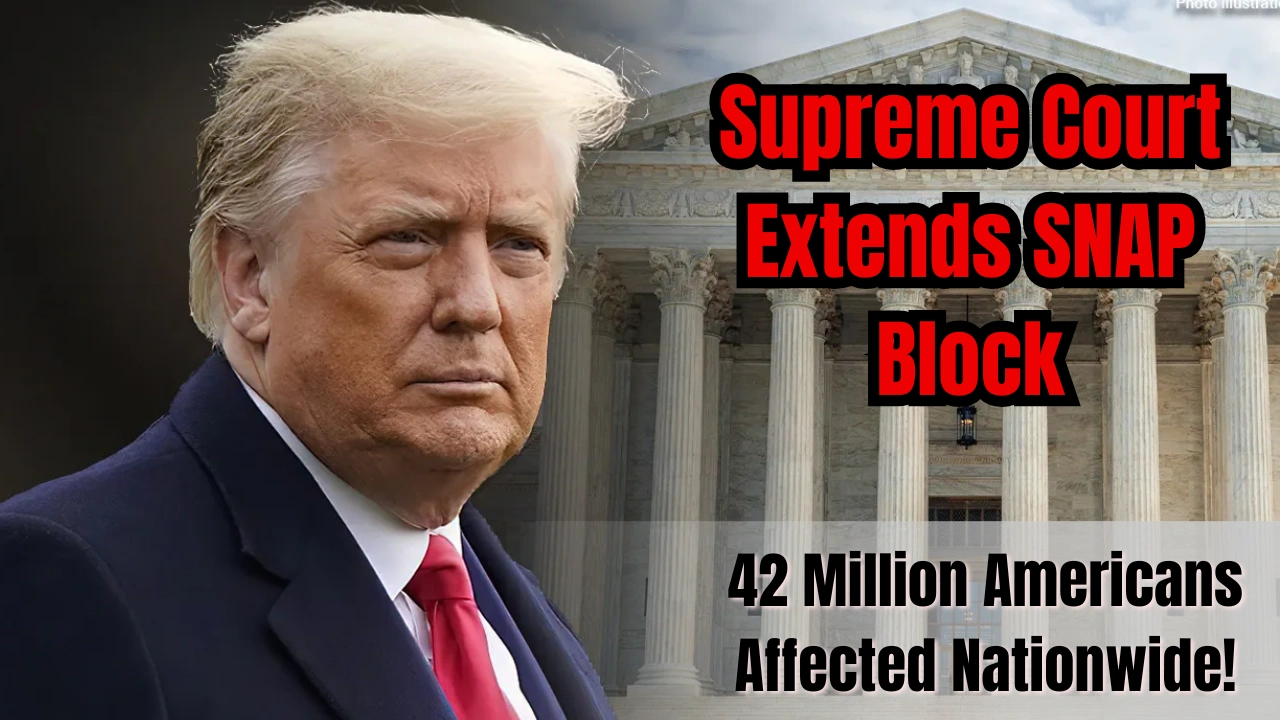
Supreme Court Extends SNAP Block– The U.S. Supreme Court has extended an order preventing the federal government from issuing full Supplemental Nutrition Assistance Program (SNAP) payments, leaving millions of Americans uncertain about when they will receive their food benefits. The move comes as Congress edges closer to ending the historic government shutdown, but for struggling families, the delay has deepened hardship.
What Happened
Supreme Court Extends SNAP Block: In a brief unsigned decision released late Tuesday, the Supreme Court extended its temporary stay on a lower-court ruling that required the federal government to resume full SNAP payments immediately. This means that, for now, states will continue distributing partial or delayed food stamp benefits while the shutdown remains in effect.
Justice Ketanji Brown Jackson dissented from the order, saying that continuing to block payments “unnecessarily harms millions of low-income Americans.”
The ruling effectively pauses roughly $4 billion in monthly food aid, according to the U.S. Department of Agriculture, which administers the SNAP program.

Why It Matters
The decision has major implications for more than 42 million Americans who rely on SNAP to afford groceries. For many families, especially single parents, seniors, and low-income workers, food stamp payments are their only consistent means of putting meals on the table.
During the shutdown, federal agencies have been unable to release the full amounts normally funded through SNAP. Several states, including California, Texas, and Florida, have already issued reduced benefits to stretch their budgets until Congress finalizes a resolution.
Food banks nationwide are reporting record surges in demand, with some shelters warning they may run out of supplies if funding doesn’t resume soon.
Legal Background
The ongoing legal battle began when several advocacy groups and state attorneys general sued the federal government for withholding full SNAP payments, arguing that it violated statutory obligations under the Food and Nutrition Act. A federal district court ruled in their favor, but the Justice Department appealed — and the Supreme Court agreed to temporarily block that lower ruling while it considers the full case.
The extension of the stay now pushes any potential resolution into late November or early December, depending on when the government reopens and the case is heard in full.
Political Context
The Supreme Court’s move comes amid growing pressure on Congress to end the 41-day government shutdown, which has disrupted not only SNAP but also other essential services like housing assistance, veterans’ benefits, and tax refunds.
While Senate leaders have reached a bipartisan deal to reopen the government, the House has yet to vote. Republicans have framed the bill as a fiscal victory, while Democrats argue it abandons social welfare priorities, including food and healthcare programs.
For millions of struggling Americans, though, the politics matter less than survival. As one SNAP recipient told reporters, “We’re not thinking about Republicans or Democrats. We’re thinking about how to feed our kids tonight.”

Economic Impact
Analysts estimate that the continued delay in SNAP disbursements could remove up to $6 billion in consumer spending from the economy this month alone. Economists warn this could hurt grocery retailers, small farmers, and local economies — especially in rural and low-income communities where SNAP spending drives local demand.
Major retailers such as Walmart, Kroger, and Target have expressed concern about declining sales during the crisis, urging lawmakers to act quickly to restore benefits.
What Happens Next
The Supreme Court’s stay remains in place until Congress either funds the government or the Court revisits the case. If lawmakers reach a deal soon, full SNAP payments could resume within days. If not, families may continue receiving reduced or partial benefits into December.
Conclusion: The Supreme Court’s decision underscores the human toll of Washington’s political gridlock. While justices debate constitutional procedure and lawmakers haggle over budgets, millions of American families remain trapped in uncertainty — waiting for the help they’ve already been promised.

For them, each delayed payment means another day without enough food, another visit to a food bank, and another reminder that the cost of political stalemate is often paid by those who can least afford it.
Disclaimer: This article is based on publicly available information and verified reports from federal agencies and major news outlets as of November 2025. It is intended for informational purposes only and does not represent political bias or legal interpretation. Readers should refer to USDA.gov or SupremeCourt.gov for official program updates and case documentation.